

Applying a signal
Induction
16 things filed against this subject, in every format the Bureau holds.
Advanced Signal Application: Connection, Clamp, Induction and Frequency Choice
The advanced session on getting a signal onto a line and keeping it there: the four ways in, which frequency to choose and why, aerial configurations, and the tracing techniques that follow from each.
Watch 2:09:53 →Earthing, Clamping, and the Limits of Induction
Where the earth goes and why it matters, connection angles at 45 and 90 degrees, double ended connections, and an honest account of what induction will and will not do for you.
Watch 1:26:46 →Getting the Best From a Genny: Connection, Clamp and Induction
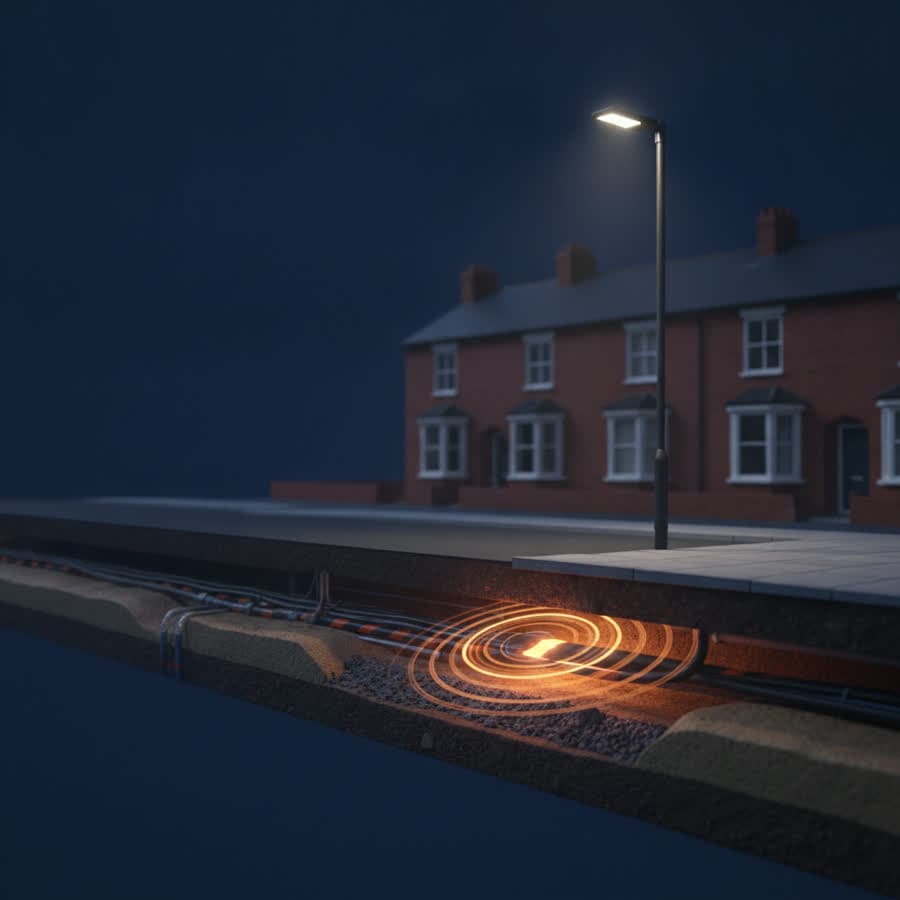
A full run through signal application: the site survey first, then direct connection, the signal clamp and induction, with street lighting worked through including how a looping in and out system behaves.
Watch 1:07:19 →The Airborne Signal Check, On Site
Lifting the CAT and pointing it at the Genny to see whether what you are hearing is coming through the air rather than the ground.
Watch 0:22 →The Problem With Relying on Induction
An outdoor demonstration of what induction gives you and where it stops being enough to trust on its own.
Watch 1:31 →The Blind Induction Sweep and Joint Orientation
No plan line to follow? The blind induction sweep works the whole area methodically, plus reading joint orientation and the 2x1 pattern.
Watch 2:17 →The Four Ways to Apply a Genny Signal
Direct connection, clamp, capacitance and induction: the four ways a Genny puts a signal on a buried service, and when each one earns its place.
Watch 4:04 →Induction: What It Is Good At, and Its Limits
What induction is genuinely good at, what it cannot follow, and the airborne trap that has you tracing the wrong service entirely.
Watch 2:53 →Locating HV: Why It Is the Hardest
HV sits deeper, often under the LV, and usually offers no connection point. Why the standard toolkit needs adapting before you go near it.
Watch 2:18 →The Two-Man Parallel Sweep and the Airborne Check
One on the Genny, one on the CAT, ten metres apart. The sweep for cables you cannot connect to, and the airborne check that keeps the trace honest.
Watch 3:27 →Getting the Best Out of Your Genny and CAT
The full webinar. Signal application from first principles: why you start with street lighting, the two ways lighting is wired, dual frequency, earthing the transmitter, induction against direct connection, and where the signal actually goes once you have applied it.
Watch 1:12:19 →