The practical half · printed page 21

Passive Modes, and Locating Technique

What power and radio can and cannot see, and how to work the ground properly once you have a signal.

Passive Modes

Printed page 21

When all Genny signal application techniques have been used, a final search in Power (P) and Radio (R) must be undertaken.


CAT4 screen close-up showing the Radio mode icon.
Fig 01CAT4 screen close-up showing the Radio mode icon.
CAT4 screen close-up showing the Power mode icon.
Fig 02CAT4 screen close-up showing the Power mode icon.

Locating Techniques

Printed page 21

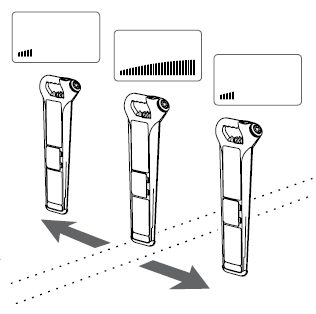
When tracing a signal, adjust the signal level so that a high reading is indicated on the bar graph, but ensure the signal is not turned up so high that the bars are completely filling the screen.

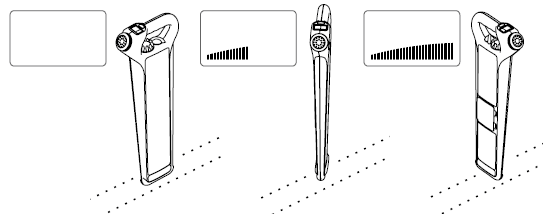
When the maximum signal is detected, stop at this point and rotate the CAT so that the signal increases and decreases. The maximum signal is detected when the CAT is at right angles or directly across the buried utility.

If the detected signal is undistorted or no adjacent buried utilities are present, the signal drop-off on either side should be equal. When the signal is distorted or other buried utilities may be present, the drop of signal will be different on either side of the utility.
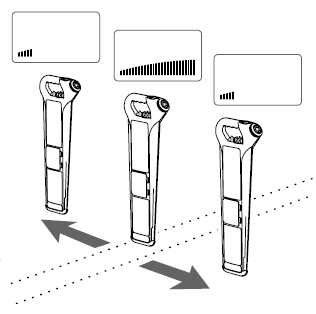
Line drawing: three CAT positions along a dotted buried line, each with its bar graph reading, the middle one filling the screen.
Fig 01Set the signal level so a high reading fills the bar graph without turning it up so far that the bars fill completely.
Line drawing: the CAT swept across a dotted buried line, the bar graph peaking over the line and dropping away by the same amount on both sides.
Fig 02An undistorted signal with no other utilities nearby: the drop off is equal on either side.
Line drawing: the same sweep across the line, but the bar graph readings either side of the peak are different from one another.
Fig 03A distorted signal, or another utility alongside: the drop off is different on either side.
Filed under