

Applying a signal
Direct connection
27 things filed against this subject, in every format the Bureau holds.
 Mini Quick Course
Getting a Signal On
The four ways to put a signal on a buried service, what each one needs to work, and the order to try them in.
Mini Quick CourseLocating Street Lighting
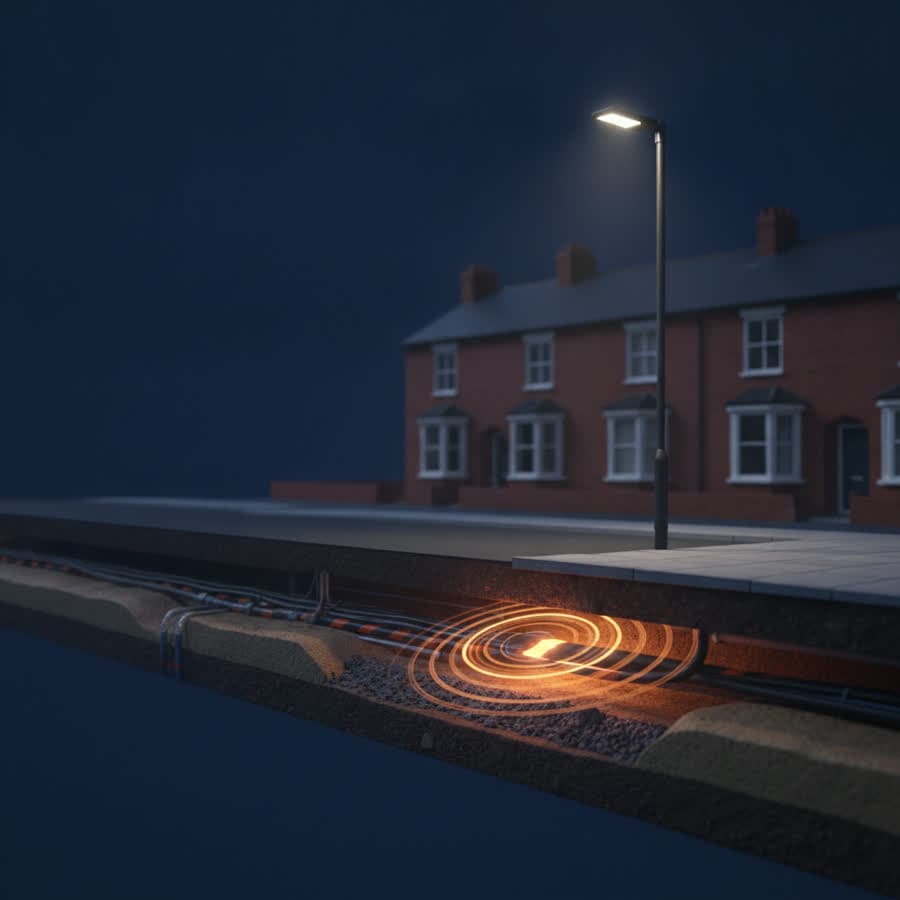
One connection at a lighting column can hand you the whole street. Six steps on why you start there, how the lighting is wired, and getting a signal onto the column.
Advanced Signal Application: Connection, Clamp, Induction and Frequency Choice
The advanced session on getting a signal onto a line and keeping it there: the four ways in, which frequency to choose and why, aerial configurations, and the tracing techniques that follow from each.
Watch 2:09:53 →Earthing, Clamping, and the Limits of Induction
Where the earth goes and why it matters, connection angles at 45 and 90 degrees, double ended connections, and an honest account of what induction will and will not do for you.
Watch 1:26:46 →Getting the Best From a Genny: Connection, Clamp and Induction
A full run through signal application: the site survey first, then direct connection, the signal clamp and induction, with street lighting worked through including how a looping in and out system behaves.
Watch 1:07:19 →High End EM: Frequencies, Connections and Current Direction
Multi-frequency locators and what changes when you move up to them: frequency selection, distorted fields and what causes them, connection technique, and reading current direction to know which way the signal is running.
Watch 1:56:21 →Reading Utility Plans: Loop In Loop Out, Teed Off, and Tracing HV
Getting what you need out of a utility plan before the kit comes out: how street lighting is wired either looped in and out or teed off, what the voltage tells you, and the pre-planning that decides where you connect.
Watch 27:07 →Tracing LV From an Outside Light on High Frequency
Using the lighting circuit at a property as the way in, on a high frequency, and following the LV from there.
Watch 0:47 →Where to Earth the Genny Near a Lighting Column
Where the earth lead goes when you are connected at a lighting column, and what happens to the signal when it goes in the wrong place.
Watch 2:07 →Connection Angles and Where the Earth Goes
Connection geometry: at 90 degrees half the signal goes each way. Angling the connection and the earth toward the target changes what you get.
Watch 2:53 →Crossbonding: Gas Meters, Bonded Metal and Outside Lights
Putting a signal on a whole property without a plug-in: gas meters, bonded metal, outside lights, and what crossbonding carries back to the network.
Watch 2:13 →Earthing the Genny: Close, Not Far
Where the earth pin actually goes: close to the column, not metres away. The myth, the demonstration, and water as an earth when there is no soft ground.
Watch 2:59 →The Four Ways to Apply a Genny Signal
Direct connection, clamp, capacitance and induction: the four ways a Genny puts a signal on a buried service, and when each one earns its place.
Watch 4:04 →Why You Start at the Lighting Column
Why the survey starts at the lighting column: one connection asks the whole street how it is wired, whatever the answer turns out to be.
Watch 3:22 →Voltstick First, Then Connect: Street Furniture Direct Connections
Before touching or connecting to any metallic surface: voltstick. Then the direct connections that put a real signal on street furniture.
Watch 1:32 →Water Mains from the Hydrant, and the Earth Lead Tone
Tracing the water main by connecting at the hydrant, and what the earth lead does and does not do to the tone when you connect it.
Watch 1:34 →Direct Connection: Street Lighting, LV and Telecoms
Setting up and earthing the Genny4, connecting at a lighting column, what to do when the column is concrete, gas risers, and the approvals you need before a telecoms lid comes up.
Watch 6:06 →Locating HV Cables with a Genny and CAT
Techniques and the things that make HV harder than LV: where you can and cannot get a connection, what the signal does on a bonded network, and how to read what comes back.
Watch 12:40 →Getting the Best Out of Your Genny and CAT
The full webinar. Signal application from first principles: why you start with street lighting, the two ways lighting is wired, dual frequency, earthing the transmitter, induction against direct connection, and where the signal actually goes once you have applied it.
Watch 1:12:19 →The Genny First Approach Explained
Why the signal generator goes on before anything else, and what a passive-only sweep is actually telling you. The training video behind the method.
Watch 16:07 →Genny and CAT Training: The Full Run-Through
The whole method end to end in under ten minutes: pre-use checks, applying a signal, locating, pinpointing and taking a depth reading.
Watch 9:40 →The Genny First Approach, In Practice
The method walked through on real ground: where the signal goes when you connect first, and what you miss when you do not.
Read →Why You Connect the Genny First
Passive detection alone is not enough to find buried services. The Genny-first method, and why it changes what a survey is actually capable of finding.
Read →The Signal Clamp: What It Does, and When You Need One
What a signal clamp is, how it compares with direct connection and induction, and the situations on site where it finds the services the other two miss.
Read →