

Service
LV mains and services
35 things filed against this subject, in every format the Bureau holds.
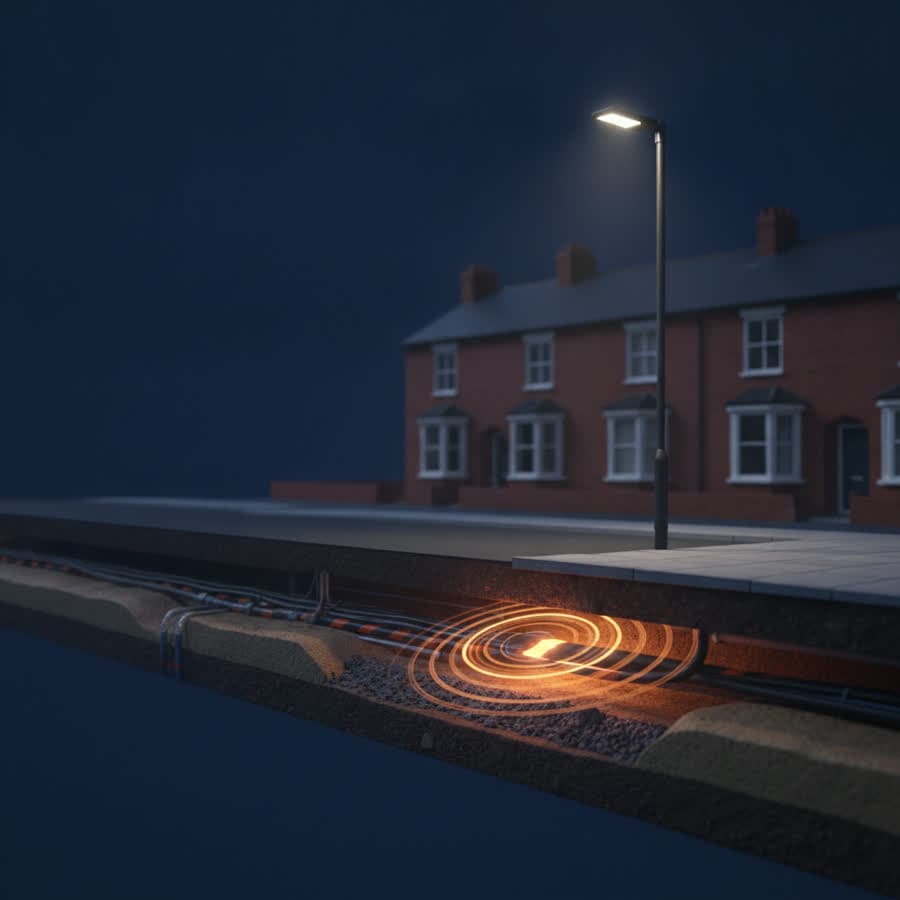 Mini Quick Course
Getting a Signal On
The four ways to put a signal on a buried service, what each one needs to work, and the order to try them in.
Mini Quick CourseLocating Street Lighting
One connection at a lighting column can hand you the whole street. Six steps on why you start there, how the lighting is wired, and getting a signal onto the column.
Earthing, Clamping, and the Limits of Induction
Where the earth goes and why it matters, connection angles at 45 and 90 degrees, double ended connections, and an honest account of what induction will and will not do for you.
Watch 1:26:46 →Getting the Best From a Genny: Connection, Clamp and Induction
A full run through signal application: the site survey first, then direct connection, the signal clamp and induction, with street lighting worked through including how a looping in and out system behaves.
Watch 1:07:19 →How a Utility Network Works, and What the Plans and Marker Plates Tell You
How the supply actually gets from the power station to a house, the cable types you meet on the way including old Hessian, and how to read a stats plan and a utility marker plate for what is really under your feet.
Watch 1:48:39 →Overlaid and Compiled Plans: Why They Invite Assumptions
What a compiled or overlaid drawing hides that the individual stats plans show. Pete Ashcroft on why one tidy drawing of everything is more dangerous than several awkward ones.
Watch 8:52 →Power and Radio: What the Passive Modes Miss
Why passive scanning is not enough on its own. What Power and Radio modes can and cannot see, why the same cable answers differently at different times of day, pot ended cables, and what the twin aerial design is doing.
Watch 47:01 →Reading Utility Plans: Loop In Loop Out, Teed Off, and Tracing HV
Getting what you need out of a utility plan before the kit comes out: how street lighting is wired either looped in and out or teed off, what the voltage tells you, and the pre-planning that decides where you connect.
Watch 27:07 →Tracing LV From an Outside Light on High Frequency
Using the lighting circuit at a property as the way in, on a high frequency, and following the LV from there.
Watch 0:47 →What Happens If You Hit a Cable
The consequences of striking a cable, overhead and underground, the path of least resistance through a person, and the injuries that follow. The reason the locator comes out at all.
Watch 40:11 →What Happens in a Cable Strike: LV, HV and the Person Holding the Tool
What actually happens when a cable is struck, the difference between low and high voltage, where the earth and phases come into it, and what HSG47 requires of you before the ground is opened.
Watch 52:24 →The Blind Induction Sweep and Joint Orientation
No plan line to follow? The blind induction sweep works the whole area methodically, plus reading joint orientation and the 2x1 pattern.
Watch 2:17 →Checking for Airborne Signals
Scan across the assumed route and prove the signal is coming from the ground, not through the air. The false trace that catches people out.
Watch 0:39 →Connection Angles and Where the Earth Goes
Connection geometry: at 90 degrees half the signal goes each way. Angling the connection and the earth toward the target changes what you get.
Watch 2:53 →Crossbonding: Gas Meters, Bonded Metal and Outside Lights
Putting a signal on a whole property without a plug-in: gas meters, bonded metal, outside lights, and what crossbonding carries back to the network.
Watch 2:13 →Worked Examples: Is That Enough Signal to Dig?
Worked street examples: which readings say dig, which say connect again, and why depth can be the thing that tells two cables apart.
Watch 4:20 →The Four Ways to Apply a Genny Signal
Direct connection, clamp, capacitance and induction: the four ways a Genny puts a signal on a buried service, and when each one earns its place.
Watch 4:04 →Hearing Both Frequencies
Setting sensitivity until both frequencies read as a little flutter, and what you learn from hearing them separate.
Watch 2:15 →How the Signal Travels
What happens to the signal after you apply it: where it goes, how it comes back, and what that means for what the CAT is showing you.
Watch 2:48 →Induction: What It Is Good At, and Its Limits
What induction is genuinely good at, what it cannot follow, and the airborne trap that has you tracing the wrong service entirely.
Watch 2:53 →Location, Not Avoidance: A Worked Street
Location, not avoidance: building the picture of a street layer by layer with the transmitter, one service at a time, instead of one sweep and hope.
Watch 5:48 →Marking Up: Move the Genny Ten Metres First
Move the Genny at least ten metres from the area you are marking up, and why marks made next to a live transmitter cannot be trusted.
Watch 0:43 →Masked Cables: When One Signal Hides Another
A strong signal can hide a second cable or pipe running close by. How to recognise when one reading might be two services.
Watch 0:41 →Nulling Out: Sleeping the LV Signal
Nulling out puts a known signal to sleep so you can hear what is underneath: the dead zone on the display, and the HV below the LV.
Watch 1:44 →Scan Technique and the Sensitivity Habit
Why zigzag scans are outdated, and the sensitivity habit that separates a survey from a walk with a beeping box.
Watch 2:20 →The Signal Clamp in One Minute
The signal clamp in one minute: jaws closed, earth in both directions, and one specific service carrying your signal.
Watch 1:09 →Signal Splitting: The Numbers at Every Tee
Every tee splits the signal, and the numbers matter: 70/30 splits, halving at junctions, and why a 10 percent remnant is so hard to see next to a 40.
Watch 5:25 →Why You Start at the Lighting Column
Why the survey starts at the lighting column: one connection asks the whole street how it is wired, whatever the answer turns out to be.
Watch 3:22 →Too Much Signal: Taming the Sensitivity Control
Full signal is not always your friend: the erratic CAT, backing the output down, and finding the level that traces clean.
Watch 2:07 →Tracing Pipes vs Cables: Where Signal Leaks
A metal pipe leaks signal along its length; a cable holds it until the insulation fails. Why the two trace differently and how to read each one.
Watch 3:37 →The Two-Man Parallel Sweep and the Airborne Check
One on the Genny, one on the CAT, ten metres apart. The sweep for cables you cannot connect to, and the airborne check that keeps the trace honest.
Watch 3:27 →Direct Connection: Street Lighting, LV and Telecoms
Setting up and earthing the Genny4, connecting at a lighting column, what to do when the column is concrete, gas risers, and the approvals you need before a telecoms lid comes up.
Watch 6:06 →Getting the Best Out of Your Genny and CAT
The full webinar. Signal application from first principles: why you start with street lighting, the two ways lighting is wired, dual frequency, earthing the transmitter, induction against direct connection, and where the signal actually goes once you have applied it.
Watch 1:12:19 →How Long Should a Scan Take?
The question with no number in the answer. In a field you could almost set a time per mode. In a street the plans and the street decide it, because they tell you how many services there are to find and how many connections that means.
Read →The Signal Clamp: What It Does, and When You Need One
What a signal clamp is, how it compares with direct connection and induction, and the situations on site where it finds the services the other two miss.
Read →